news • 16 April 2026
Escapee Anna Komitska Awarded Funding by Immersive Arts UK
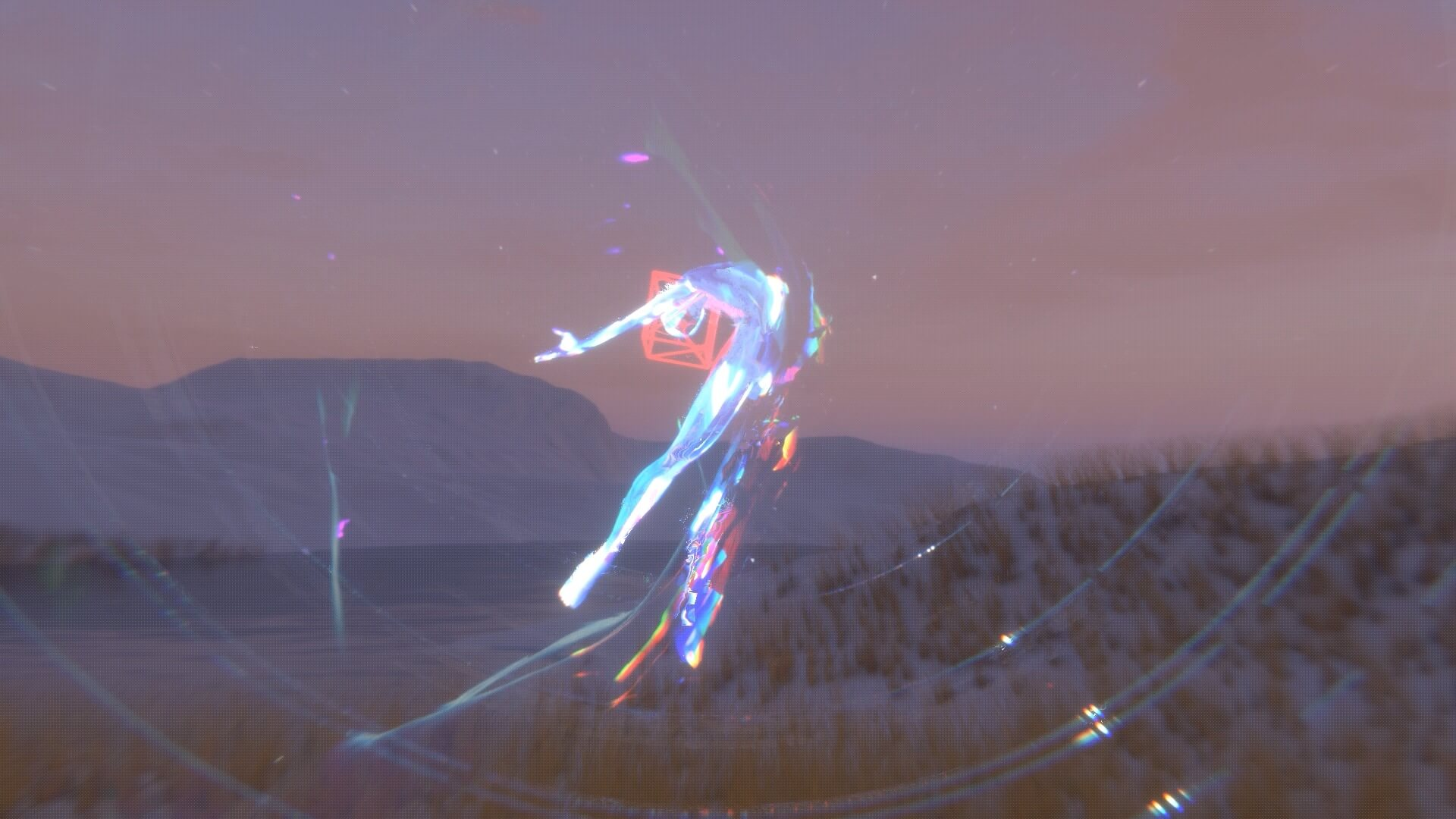
Where can immersive media skills take you? For one Escapee, into projects for clients like Meta, on tour with JLO, and now into the world of fine art installations. MA Game Art Escapee and Escape Studios Studio Assistant Anna Komitska has been awarded a £5,000 Explore grant by Immersive Arts UK to develop the prototype for her installation project, In Conversation with Soil.
As an Escape Alumna, Anna also participated in the validation panel of our new BA (Hons)/ MArt Immersive Media degree, starting September 2027.
How did you first become interested in immersive media?
Before doing my masters, I worked as an Assistant Producer for nearly three years for a hologram company called Kaleida. They specialise in large-scale immersive experiences. I got to support projects from small to big budget activations, taking on a range of responsibilities in the full production cycle for clients like BOSS and Netflix.
While I was there, we worked on a hologram for Meta, when they launched their Meta Quest VR game ‘Asgard’s Wrath 2’. The hologram popped up outside of The Game Awards in Los Angeles in 2023.
We also created a hologram of Master Chief from Halo for Paramount + - it was the biggest hologram done in four different time zones on the same day.
What did you study at Escape Studios and how will it support you?
I studied MA Game Art at Escape Studios, having completed a BA in Photography at a different university. My BA was very conceptual, approaching projects through photographic theory and challenging how the spectator engages with the artwork. It had been a while since I've done a conceptual project like this, and the grant is an opportunity for me to revisit that since I've picked up a range of technical skills through my MA. I’m interested in collapsing the boundary between audience and environment - all participants are entangled in a mutually affective system.
Can you tell us a bit more about ‘In Conversation with Soil’?
Thematically, my proposal centres on the world of forests, soil and more-than-human species - specifically, how they form knowledge, communicate, sense and react to changes in their environment. I'm particularly interested in using remote sensing (satellite) data. I’m also hoping to enter in direct conversation with Ecosystem and Earth scientists. Immersive media affords an exciting opportunity to bridge arts, technology and science, to make scientific findings accessible to the public, and to remind us to be more empathetic towards our surroundings.
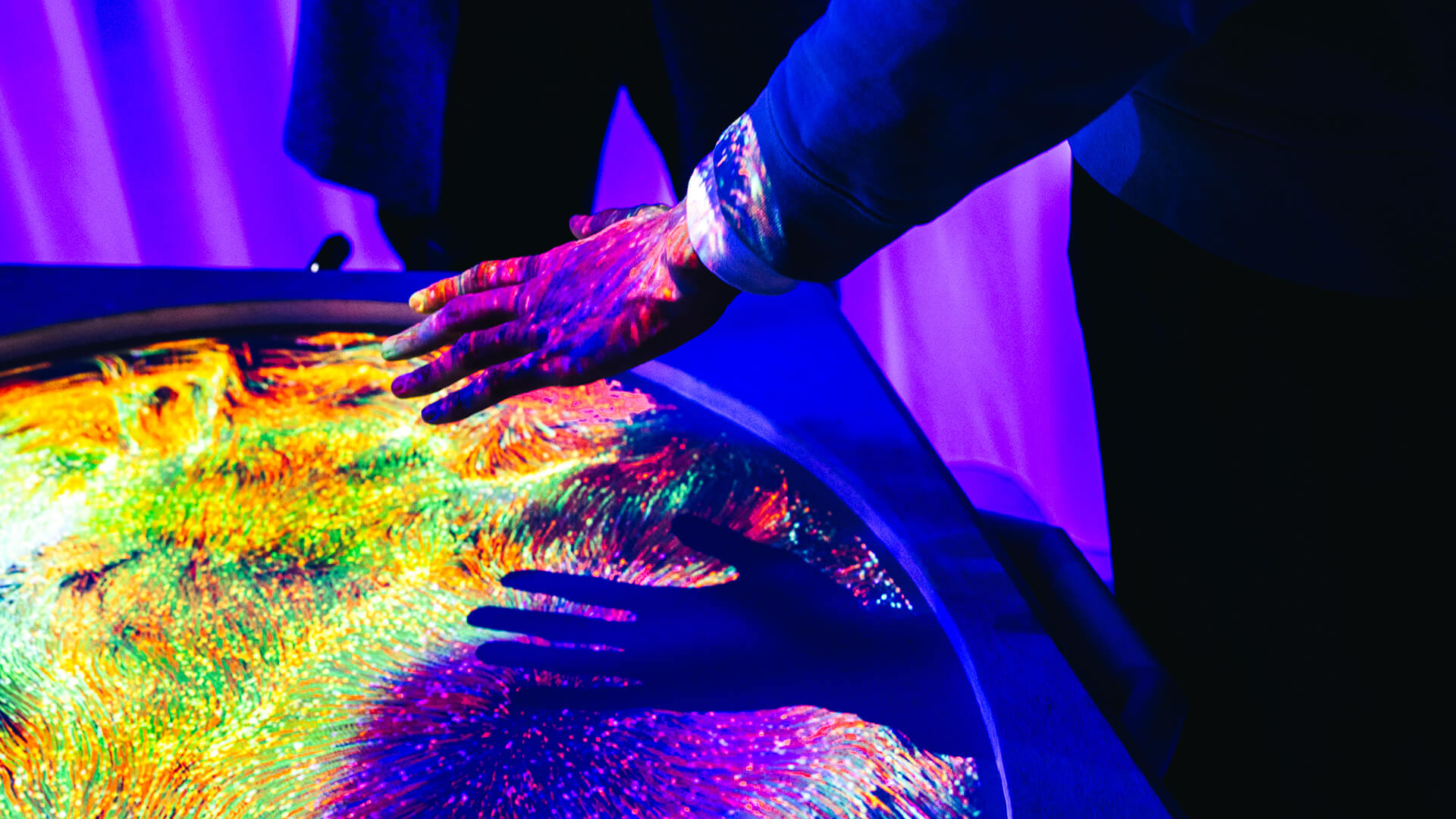
My aim is to create a responsive environment using spatial computing and computer vision - in other words, use camera or motion sensors to affect the virtual world. And it'll be multi-sensory, using visual, sound and haptic signals. With an immersive piece, the audience is no longer a spectator.
In terms of software, I’ll be using Unreal Engine, Touch Designer, Ableton, and Resolume. Most of these tools are taught on the upcoming Immersive Media degree.
Can you let us know a bit about where we see immersive media?
Immersive media is such a broad term - it can range from a gallery experience to a brand activation. It might take the form of a large-scale outdoor projection or a 360 dome. It can also be immersive theatre, where projections are used on stage to make the audience feel part of the performance.
Exhibitions can be highly immersive, such as those at The Barbican or 180 The Strand - projects like Rain Room, LUX or the work of Marshmallow Laser Feast.
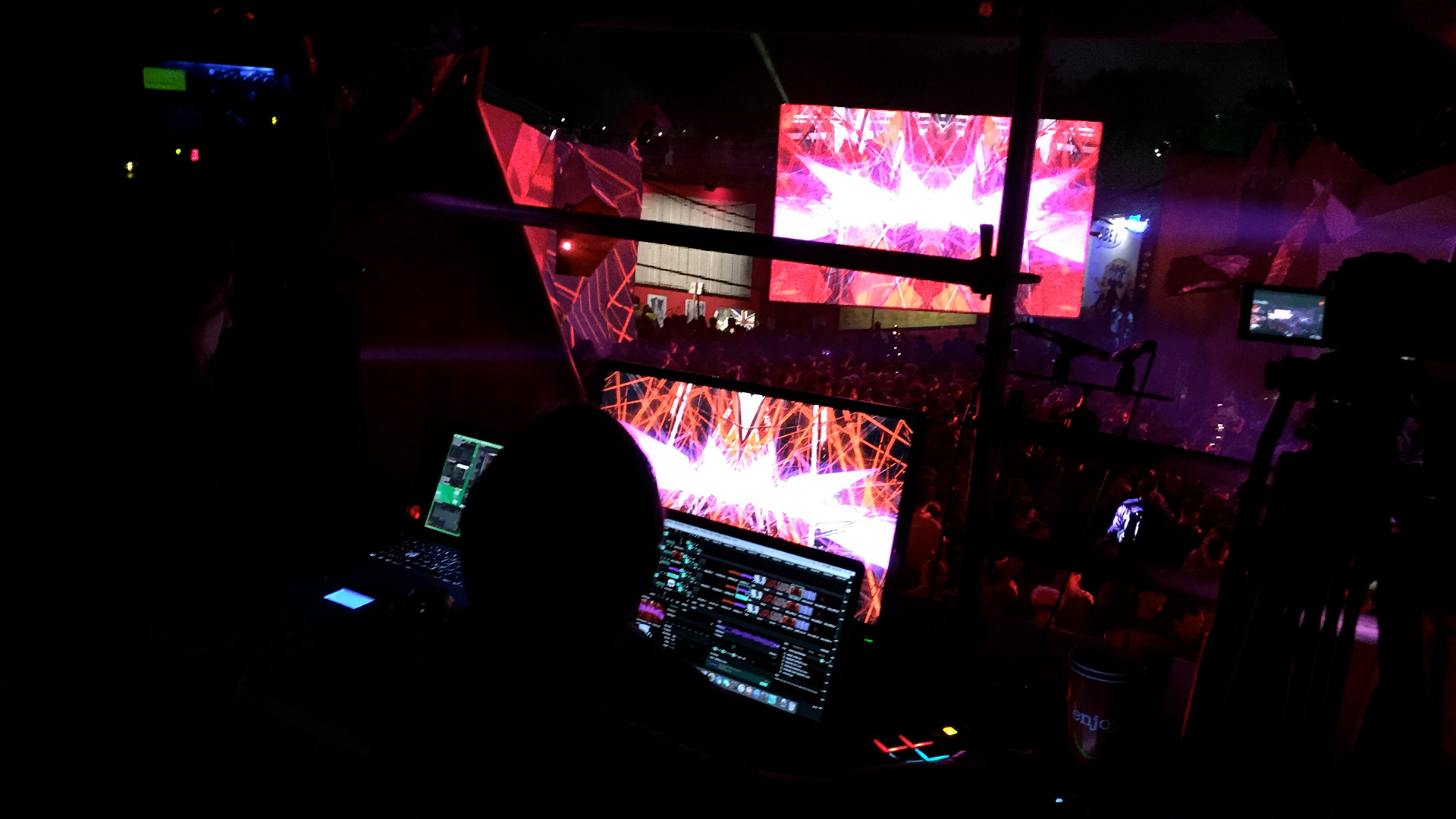
Additionally, you’ve got music events, raves and touring, which are a different sort of dynamic immersive experience. You engage fully with the present moment, while you affect your environment as it affects you, as opposed to passively looking at images from a distance, for example.
What do you enjoy most about working in this area?
I really enjoy bringing the big picture together with all its moving parts in pre-production, and the creative process of bringing an idea to life that’s initially hard to grasp through the right technology. Setting up a system that works as intended while creating an aesthetically captivating piece is rewarding. I enjoy the variety too: every project comes with its own set of challenges, and it’s exciting to figure out which approach would best match the brief.
Out of all the production stages, besides the vigorous planning and creative work, I really enjoy being on site. You’re with a crew who works like clockwork to put on a show to a very high standard. I love feeling the buzz of everyone working together to make it happen when failure isn’t an option.
What kind of jobs can Immersive Media graduates go into?
I got to join the JLO music tour in Asia last summer. I was responsible for backing up and organising recorded footage, as well as video editing for socials.
On a project like this, graduates could choose to become Video Technicians for projection and playback - they are responsible for setting up the visual content being played on the stage. They work closely with other departments, like the Lighting and Sound Designers, to ensure content plays at the right cues, format, maps correctly without delay. Graduates could also pivot towards VFX for film, games, motion graphics or animation.
The course equips you with transferable skills, you could go into all kinds of different avenues and roles.
Do you have any advice for people looking to get into immersive media?
Troubleshooting is a key skill they need to develop, and they should really embrace that, rather than fear the possibility of something breaking. It is also a team effort and being able to work well with others is important.
Be open to understanding how different networks and tools work in different contexts. You become more adaptable and hands-on in the process, which is necessary in industry.
Being curious to learn and find a solution to anything that comes your way is essential.
Immersive Arts UK is an ambitious three-year programme taking place across the UK from 2024-2027, using an artist-led approach to working with immersive technologies. In Conversation with Soil is planned to finish its first stage of development at the end of July 2026 - you can read more about it over on their site.
To learn more about studying immersive media with us check out our BA (Hons)/ MArt Immersive Media degree, brand-new for September 2027.
3-4 Years
Undergraduate
BA (Hons)/MArt Immersive Media
Courses, Immersive, Industry, Press Release
Escape Studios and Framestore Immersive create cutting-edge degree